 On 25 Oct, 2017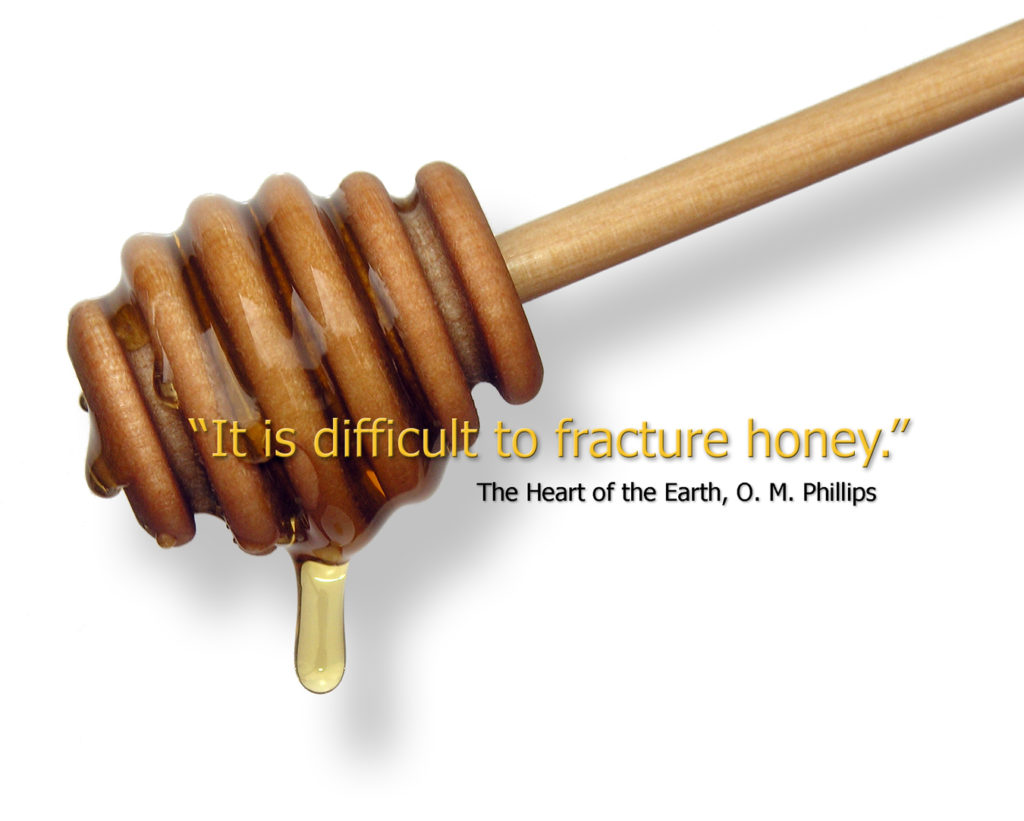
It is devastating to think that one minute you’re going through your daily rituals of family, work, school, or play only to have the very next minute shake your routine right out of control.
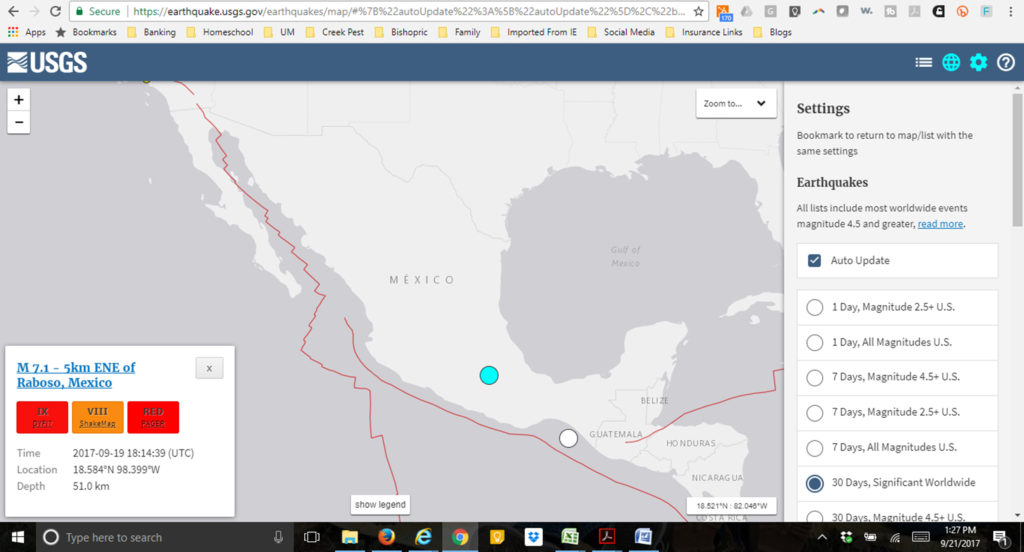
Many lives were affected by the recent 7.1 earthquake in Mexico on September 17, 2017. Some even saw, first hand, buildings crumble right before their eyes. Just imagine standing in the road only to see an apartment building turn to dust right in front of you. It was truly a catastrophic event.
As I was reading about the facts of the earthquake I noticed that the hypocenter, or depth, was 51 km below the surface. The crust of the Earth in Mexico is only about 30 km thick. https://earthquake.usgs.gov/data/crust/
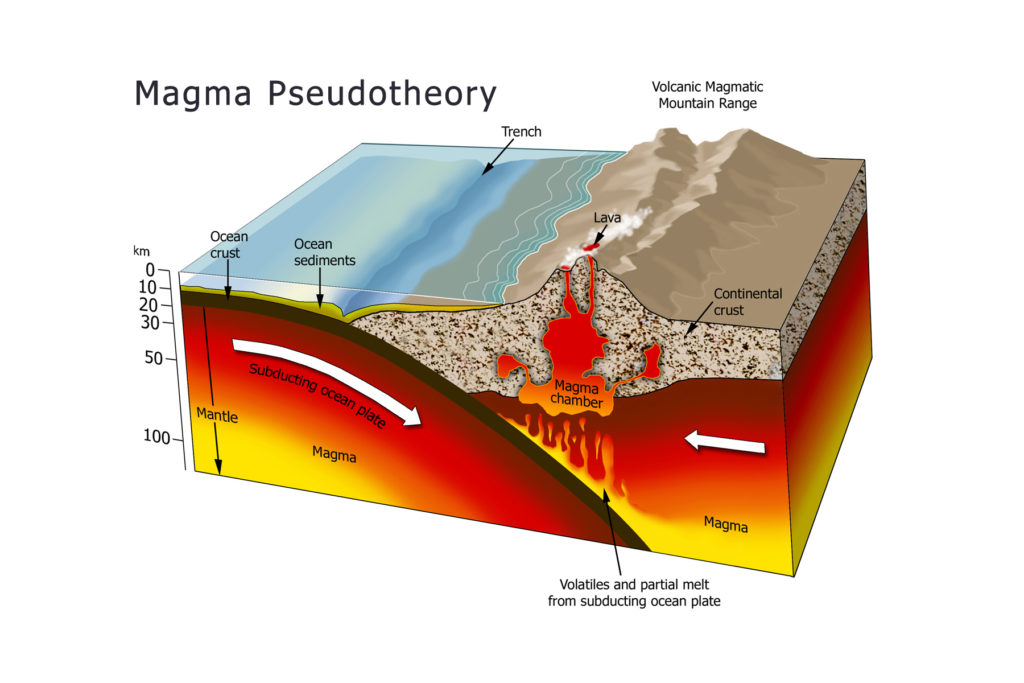
Currently we are taught in schools & universities and by family & friends, only because they don’t know about the UM yet, that the mantle, which is under the crust, is molten or liquid rock.
Geophysicist, O.M. Phillips compares molten rock to “honey“. That is very interesting because the USGS website describes an earthquake to kids as, “what happens when two blocks of the earth suddenly slip past one another.” https://earthquake.usgs.gov/learn/kids/eqscience.php
Australia’s geoscience website defines earthquakes as “the vibrations caused by rocks breaking under stress.” http://www.ga.gov.au/scientific-topics/hazards/earthquake/basics/what
O.M. Phillips, wrote in The Heart of the Earth, “If, as we have surmised earthquakes are the result of a sudden local fracture, a release of accumulated stress, then it follows that considerable rigidity is required of the material before an earthquake can be generated. It is difficult to fracture honey. The fact that earthquake centers are sometimes found to depths as great as 700 km indicates that the material at these depths must still be rigid enough to support a gradually accumulated stress without flowing, until finally the stress concentration becomes so great that it breaks.”
I was giving some honey to my kids the other day and I made a huge mess. I poured the honey out on a spoon and miscalculated how much could fit on the spoon. It dripped off the spoon and onto the floor. Little hands became sticky as they tried to catch the falling honey. I should have just pulled out an old candy cane, snapped it into pieces and split it amongst them.
FQ: If molten rock is described as being like honey how do we get “a sudden local fracture” 50 km under the surface of the Earth? About 26 hours after Mexico was hit by the 7.1 earthquake there was another one East of Australia. It was a magnitude 6.4. The hypocenter, or depth, was 200 km.
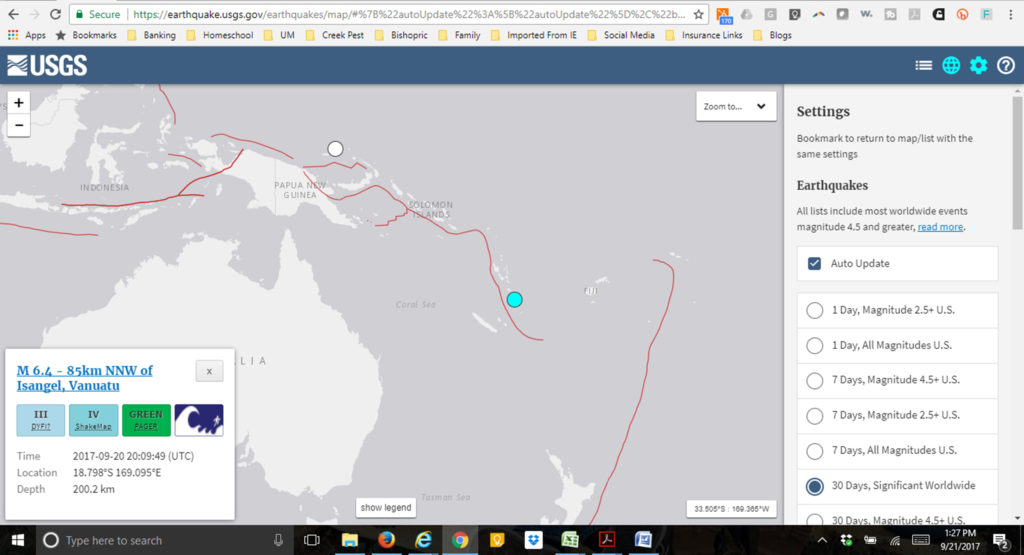
If molten rock is like honey how do we get these deep earthquakes?
If you have read Volume I of the UM then you will have learned that we actually live on a hydroplanet, a planet made from water. This means that within the mantle and core of the Earth there are extremely large amounts of water and ice. From the Universal Model we read, “Research and experiments have been conducted to demonstrate just how deep-Earth fractures can occur. One such process was reported in the Journal of Geophysical Research, in the article, Physical Mechanism of Deep Earthquakes. The research explains how deep earthquake fractures can occur in ice:”
The article goes on to explain their observations of polycrystaline ice fracturing under pressure and low temperature. Their observations explain deep earthquakes.
The article finishes with, “Finally if this is the earthquake source mechanism in deeply subducted lithosphere, then earthquakes should shut off when all the polymorphic phase changes have occurred. This may explain the maximum depth of earthquakes at about 680 km.“
To learn more about this process refer to Universal Model Volume I, Chapter 7.7 : Earth’s Hydrology Redefined; Icequakes on page 288.


